The Kirtimukha tattoo is a striking blend of ancient mythology and contemporary body art. This powerful symbol, known as the “Face of Glory,” has roots in Hindu and Buddhist traditions and continues to inspire tattoo enthusiasts around the globe.
In this article, we explore the Kirtimukha’s origins, its deep symbolism, and how it has evolved in today’s tattoo culture.
What Is the Kirtimukha?
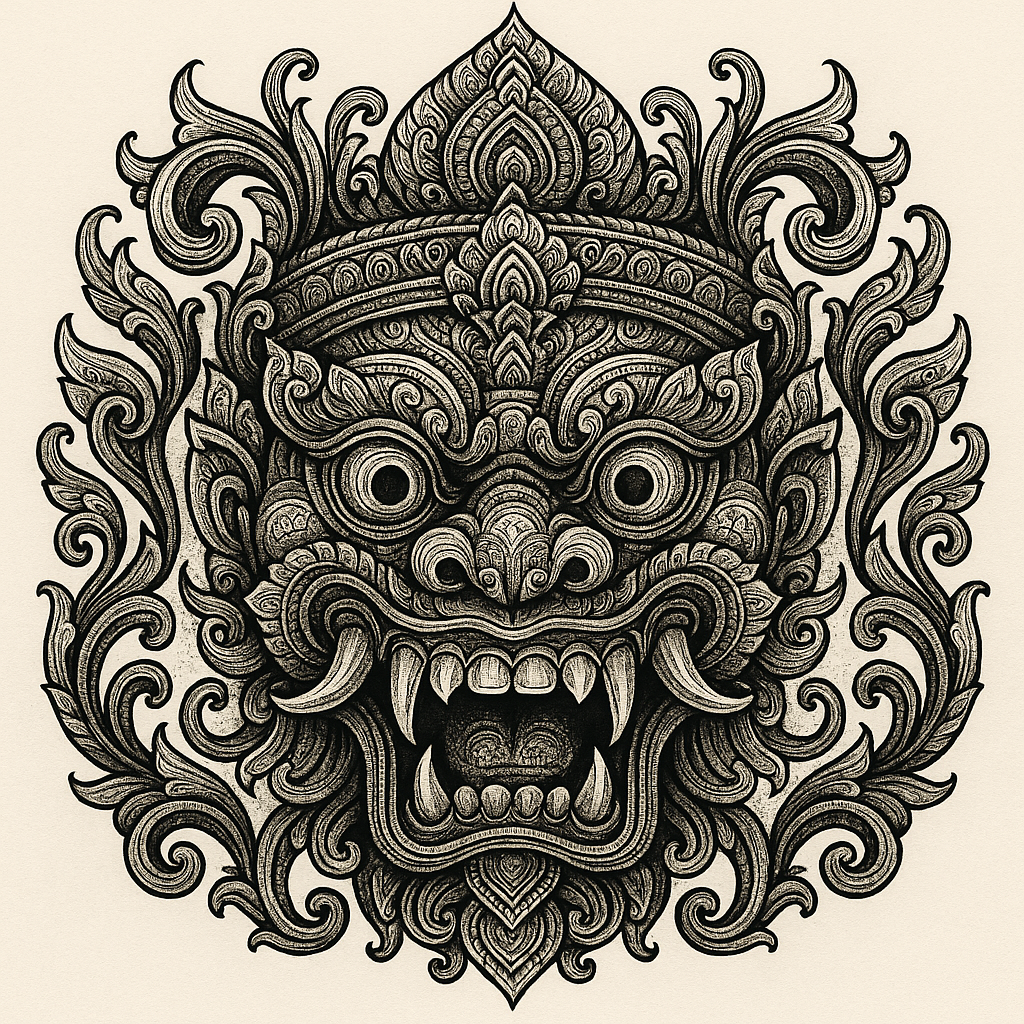
The Kirtimukha is a fierce, monster-like face commonly seen in Hindu and Buddhist temple architecture.
It is characterized by bulging eyes, a wide-open mouth with sharp teeth, and often appears to be swallowing its own body or tail.
This motif is usually placed above doorways, arches, or temple spires as a guardian against evil and negative energies.
The Myth Behind the Kirtimukha
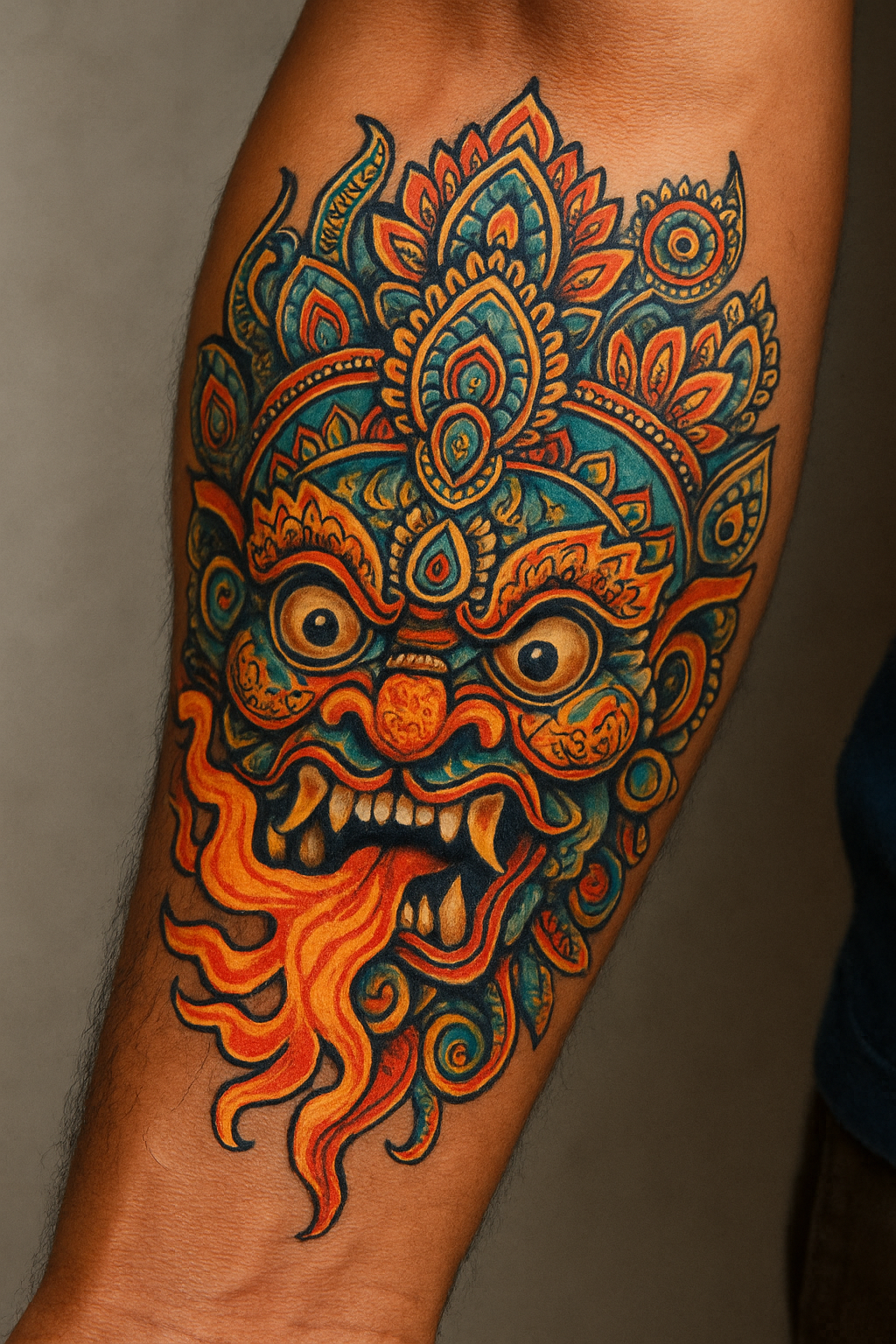
According to Hindu mythology, the Kirtimukha was created by Lord Shiva to confront a demon who threatened his power.
Shiva’s wrath manifested as a terrifying creature that ultimately became a symbol of protection and transformation.
The Kirtimukha’s self-devouring form represents the cyclical nature of life, death, and rebirth – echoing themes found in other ancient symbols like the Ouroboros.
Architectural and Cultural Significance
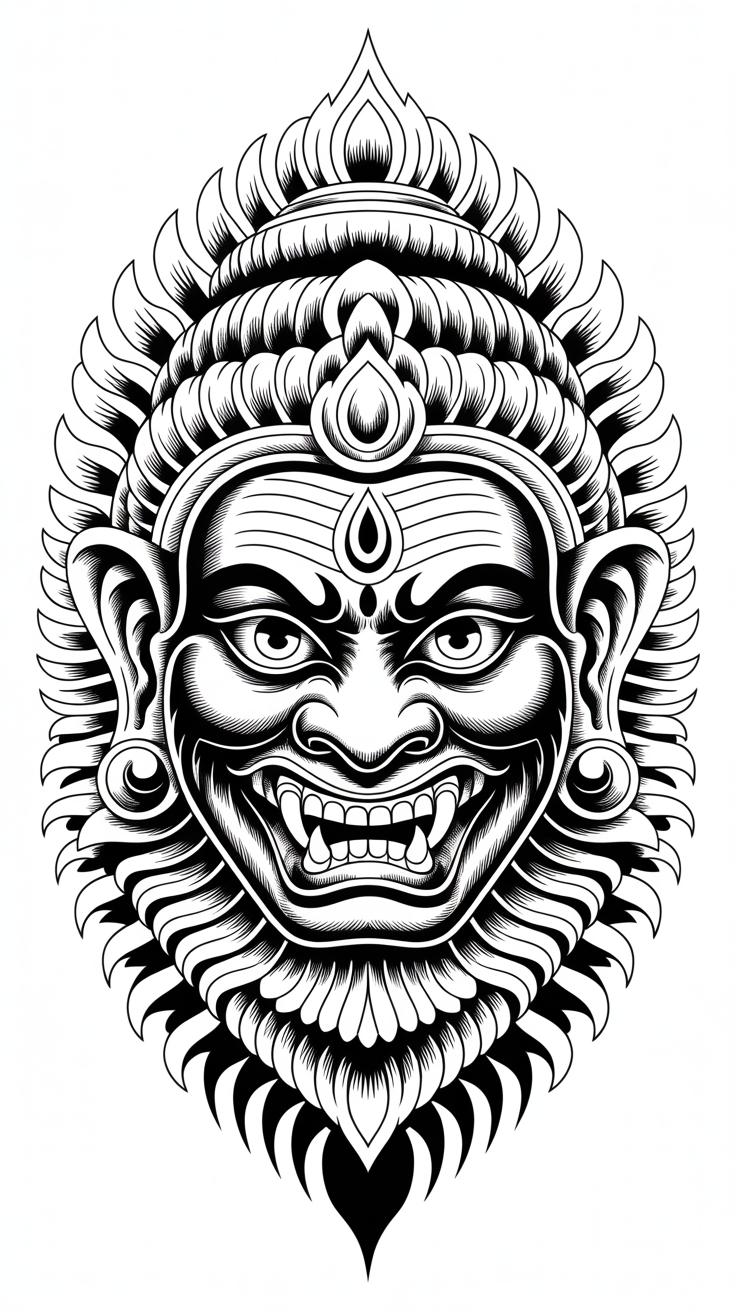
In temples across South and Southeast Asia, the Kirtimukha serves as a threshold guardian.
Its presence at entrances symbolizes the transition from the ordinary world to the sacred, repelling negative forces before they can enter holy spaces.
The motif is also found in Buddhist and Jain temples, highlighting its widespread spiritual importance.
Symbolism of the Kirtimukha Tattoo
Protection and Warding Off Evil
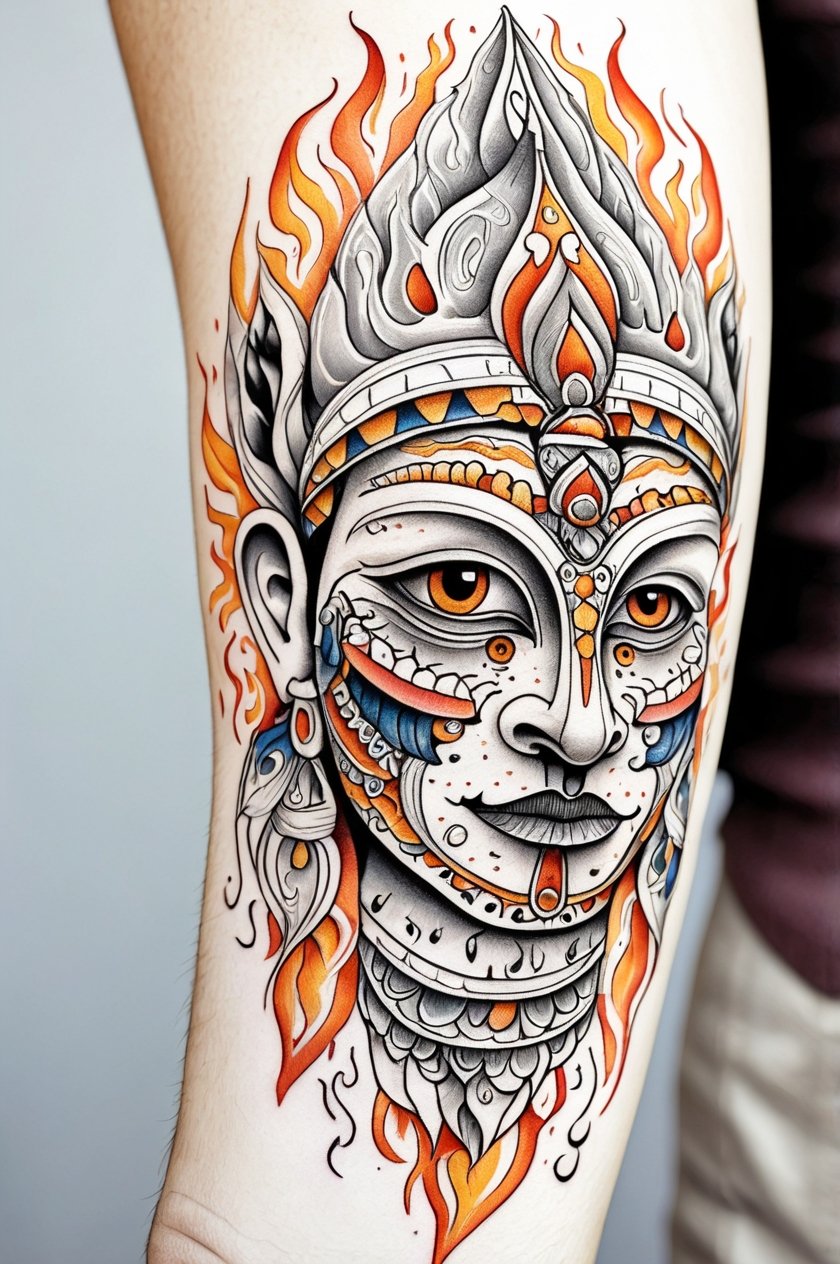
Kirtimukha tattoos are chosen by many for their protective qualities.
The fierce face is believed to shield the wearer from harm, negativity, and misfortune.
In tattoo art, it is often placed on the chest, back, or arms – areas associated with strength and guardianship.
Transformation and Renewal
The Kirtimukha’s self-consuming form symbolizes the destruction of the ego and the continuous cycle of transformation.
This makes the tattoo appealing to those seeking personal growth, spiritual awakening, or a reminder of life’s impermanence.
Devotion and Identity
For followers of Shiva and those interested in Hindu mythology, the Kirtimukha tattoo is a declaration of faith and cultural identity.
The design can be personalized with additional elements such as lotus flowers, mandalas, or traditional patterns, making each tattoo unique.
Modern Kirtimukha Tattoo Designs
Traditional vs. Contemporary Styles
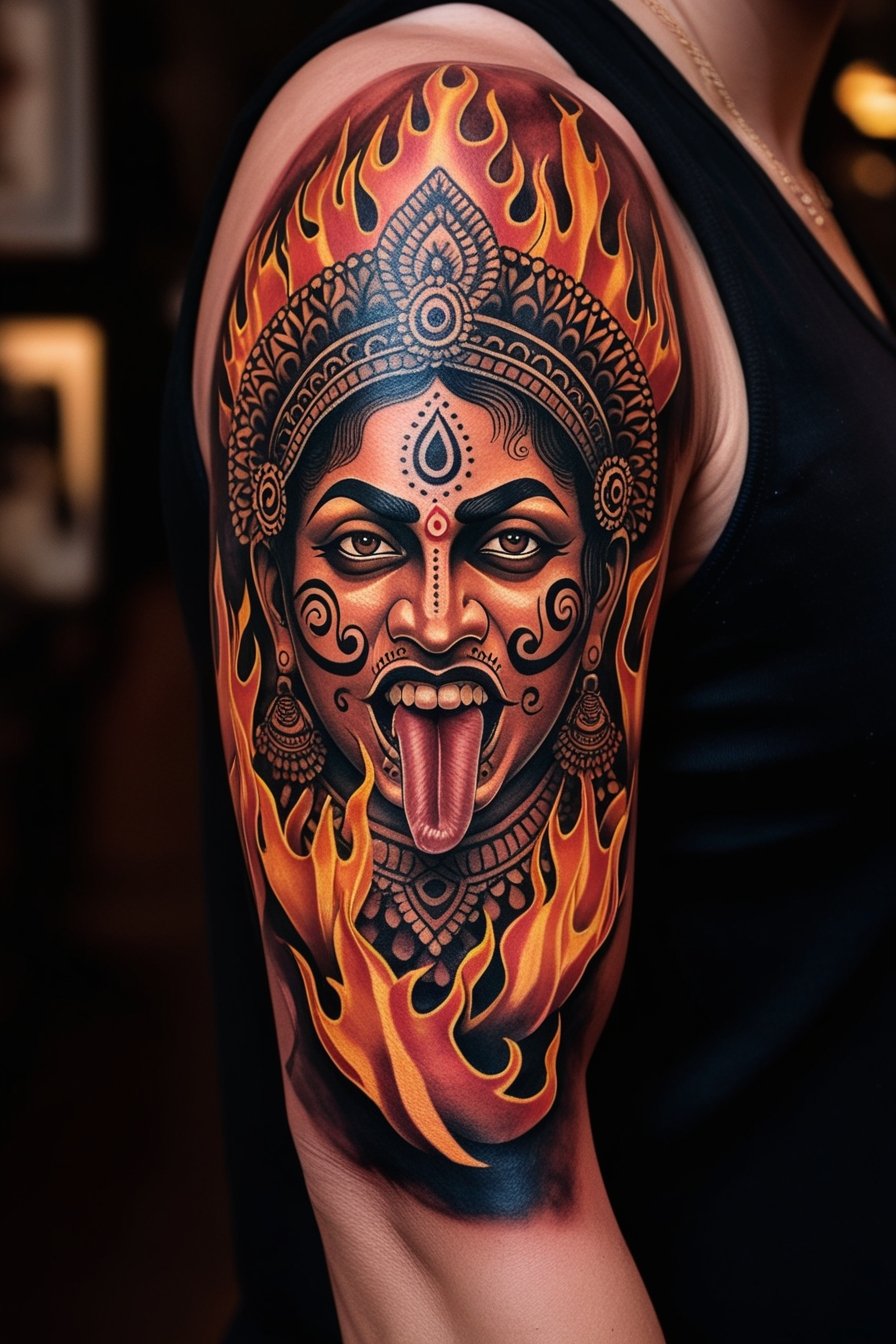
- Traditional: These tattoos closely follow ancient temple carvings, featuring detailed facial elements, symmetry, and ornate patterns.
- Neo-Traditional: Modern artists blend the Kirtimukha with other styles, such as Japanese or geometric tattoos, for a fresh look.
- Realism: Some tattooists create hyper-realistic versions that mimic the appearance of stone carvings on the skin.
Popular Placement and Personalization
Kirtimukha tattoos are highly adaptable.
They can be scaled to fit different body areas and customized with additional symbols or colors.
Common placements include the chest, back, upper arm, and forearm.
Table: Kirtimukha Tattoo Design Variations
| Style | Key Features | Popular Placements |
|---|---|---|
| Traditional | Symmetrical, ornate, detailed | Chest, back |
| Neo-Traditional | Blended with other cultures/styles | Arm, forearm |
| Realism | 3D shading, stone-like texture | Back, upper arm |
Psychological and Cultural Perspectives
Tattoo as a Talisman
Many wearers see the Kirtimukha tattoo as a form of spiritual armor.
It is chosen not just for its visual appeal but also for its ability to provide comfort and strength in times of uncertainty.
Cultural Appreciation and Respect
As the Kirtimukha tattoo gains popularity outside its traditional context, questions arise about cultural appropriation.
Responsible tattoo artists and wearers educate themselves on the symbol’s origins and meaning to ensure respect and appreciation.
Get Your Kirtimukha Tattoo at Black Poison Tattoo Studio, Ahmedabad
The Kirtimukha is one of the most technically demanding and spiritually significant tattoo designs. At Black Poison Tattoo Studio in Bodakdev, Ahmedabad, our artists have deep experience creating detailed spiritual and Hindu mythology tattoos, including Mahadev, Ganesha, Hanuman, Kali Maa and Kirtimukha designs.
Whether you want a traditional temple-inspired Kirtimukha in blackwork, a neo-traditional fusion design, or a hyper-realistic stone-carving effect, our team will work with you to create something completely unique to you.
- Free design consultation before any commitment
- 19+ years of experience in spiritual and religious tattoos
- Single-use sterilized needles on every session
- 2,500+ five-star Google reviews
- Custom Kirtimukha designs created from scratch
Book your free tattoo consultation at Black Poison Tattoo Studio, Bodakdev, Ahmedabad. Call or WhatsApp: +91 81413 38866. Open 11 AM to 9 PM, 7 days a week.
Conclusion
The Kirtimukha tattoo is more than just a striking design – it is a powerful symbol of protection, transformation, and cultural identity.
Whether inspired by ancient mythology or modern artistry, this tattoo continues to captivate and inspire people around the world.
Frequently Asked Questions
What does the Kirtimukha tattoo symbolise?
The Kirtimukha tattoo symbolises protection, transformation, and spiritual power. Known as the Face of Glory, this fierce guardian from Hindu and Buddhist mythology is believed to shield the wearer from negative energies. It also represents the cycle of creation and destruction, making it a deeply meaningful choice for those drawn to spiritual body art.
What is the Kirtimukha in Hindu mythology?
In Hindu mythology, the Kirtimukha was created by Lord Shiva in a moment of divine rage. When challenged by a demon, Shiva’s wrath manifested as a ferocious face that consumed the demon and, having nothing left to devour, turned upon itself. Shiva was so moved by this display of absolute devotion that he declared the Kirtimukha sacred, making it a permanent guardian of temple doorways throughout South and Southeast Asia.
Is the Kirtimukha the same as Kala?
Kirtimukha and Kala are closely related but distinct. Kala is the Javanese and Balinese name for a similar face motif found in Indonesian temple architecture, while Kirtimukha refers specifically to the South Asian Hindu tradition. Both share similar imagery and protective symbolism, but Kirtimukha has a more detailed mythological origin story directly connected to Lord Shiva.
Where is the best placement for a Kirtimukha tattoo?
The chest and back are the most traditional placements for a Kirtimukha tattoo, associated with strength and guardianship. The upper arm and forearm are popular for visibility and size flexibility. A large Kirtimukha with detailed temple ornamentation works best on the back or chest, while a smaller version suits the forearm or upper arm well.
Can I get a Kirtimukha tattoo if I am not Hindu?
Yes. Many people from different cultural and religious backgrounds choose the Kirtimukha tattoo for its artistic power and universal symbolism of protection. The most respectful approach is to understand the symbol’s origins and meaning before getting it tattooed. At Black Poison Tattoo Studio, our artists are happy to discuss the history and significance of the Kirtimukha during your free consultation.
How much does a Kirtimukha tattoo cost in Ahmedabad?
The cost of a Kirtimukha tattoo at Black Poison Tattoo Studio in Ahmedabad depends on size, detail, and placement. A detailed Kirtimukha with temple ornamentation is typically a medium to large piece priced based on time and complexity. Book a free consultation for an accurate quote. Call or WhatsApp: +91 81413 38866.
Planning a Kirtimukha or other spiritual tattoo? Our artists draw every design from reference at Black Poison Tattoo Studio in Bodakdev, Ahmedabad. Consultations are free.