The short answer: To become a tattoo artist in India, learn to draw well, learn hygiene and infection safety, then train under supervision on practice skin before any real client. You can do this through an academy, a studio apprenticeship, or both. No national tattoo licence has been reported, and a course certificate is not a government licence.
We run a tattoo academy, so read this with that in mind. Here is how we would advise a friend.
This guide is written by the team at Black Poison Tattoo Academy, part of Black Poison Tattoo Studio in Ahmedabad. The studio has been tattooing for 19+ years and holds 4.8 stars from 2,500+ Google reviews, which belong to the studio, not the Academy. Outside facts are sourced at the end, and where we could not verify something, we say so.
What is the short answer, and how long does it take?
Tattoo artist kaise bane? Pehle drawing, phir hygiene aur safety, phir kisi mentor ki nigrani mein practice.
There are five steps, and the order matters.
- Draw until your lines, shading and designs are reliable. Everything else sits on this.
- Learn hygiene and infection control before you touch a machine. A tattoo is a wound made with a needle.
- Learn the machine and needles on practice skin, with someone experienced checking your work.
- Work on real skin only under supervision, once a mentor says you are ready.
- Build a small portfolio of your own tattooed work and keep learning.
How long does it take? There is no official timeline. US sources describe apprenticeships of one to three years, or anywhere from six months to four years. We found no reliable India-specific figure, so treat those as a rough idea only.
At Black Poison Tattoo Academy the Professional Tattoo Artist Course for beginners runs 4 to 6 months, 5 days a week: 4 months for students who already draw well, 6 months for beginners who need drawing fundamentals and more practice. We recommend 6 months for beginners. Finishing gives you a foundation in design, machine handling, safe studio practice and supervised tattoo work. More practice and experience are still needed after that.
What skills do you need first?
Tattoo sikhne ke liye kya karna padega?
Drawing and design
A tattoo is a drawing that has to work on a curved, moving, living surface. One training site puts it bluntly: “You cannot tattoo better than you can draw.” It adds that drawing tattoos is different from drawing in general. A US supplier’s apprenticeship guide says a beginner’s portfolio does not need tattoo work, it needs to show that you can draw well, with consistent lines, shading and control of tone. If you also want to design digitally, our Digital Tattoo Design and Consultation Course covers that, but drawing still comes first.
Machine control
Needle depth, speed and hand pressure are learned by repetition. The same guide describes the usual order: studio basics such as sterilisation first, then machine and needle work on fake skin, foam or synthetic materials, and only then real clients under supervision.
Hygiene
Learn this before you touch a machine. The reasons are in the hygiene section below.
Skin and client care
A public health fact sheet from York Region in Ontario, Canada, says the provider should check the client’s skin for open cuts, wounds and signs of infection, refuse service if any are found, and give verbal and written aftercare information. Those are habits to learn from a trainer, not from a video.
Are you ready to draw? A short self-test
This is general advice, not a Black Poison Tattoo Academy entry requirement. Before you apply to any school or studio, answer these honestly.
- Can you draw a clean, steady line several inches long in one stroke, straight or curved, without going back over it?
- Can you fill a shape with even tone and shade a smooth gradient from dark to light?
- Can you redraw the same simple design at three different sizes and keep the proportions?
- Can you design an original piece from a short written brief, without tracing or copying a finished tattoo?
- Can you sit with one drawing for an hour, take criticism, and redraw it?
- Do you have a few pieces you would happily show a stranger?
How to read your answers. Mostly yes: you are ready to ask a school or studio, and those pieces are your portfolio. Mostly no: you have not failed, you have found where to start. Draw every day for a few months and test yourself again. This is why Month 1 of our programme is Drawing and Art Fundamentals.
Academy, apprenticeship or self-learning: which is better?
Tattoo kaise sikhe?
There are three real routes, and one that is not a route at all.
| Route | What it gives you | Trade-offs |
|---|---|---|
| Studio apprenticeship | One-to-one learning inside a working studio. An India-focused career guide calls it the most widely respected entry route. | Can be long (US sources say one to three years). Early stages are often unpaid, and some mentors charge tuition (US source). Quality depends on one mentor. No fixed syllabus. |
| Academy or structured course | A set syllabus, hygiene taught as a subject, practice skin before real skin, and a batch of other learners. The same guide says courses typically cover hygiene, client screening, technical skills and artistry. | Quality varies between schools. A certificate is not a licence. A UK careers page warns that courses do not mean you are fully qualified. |
| Self-learning | Your own pace and schedule. | A US training site warns that not all information online is correct, or even safe. A US supplier’s guide says the self-taught path carries significant legal, professional and reputational risks. |
Tattooing yourself, friends or family is a bad route. Contaminated equipment or ink, unclean hands and tap water used to dilute ink are all infection routes listed by the York Region fact sheet. You also cannot judge your own early mistakes, a friend will not tell you honestly when your line is bad, and the result is permanent. Practise on paper first, then practice skin, with someone experienced watching.
So which is better? Neither wins for everyone. An apprenticeship suits someone who can find a good mentor, wait, and cope with unpaid early months. A course suits someone who wants structure and taught hygiene. Many people do a course and then seek more studio time, and the India-focused guide says most professionals recommend both. We run a course, so we are biased, which is why the trade-offs that do not favour us are here too.
What about hygiene, safety and the legal position in India?
Why hygiene comes first
The York Region fact sheet says tattoo equipment can become contaminated with bacteria, fungi and bloodborne viruses such as hepatitis B, hepatitis C and HIV. Karnataka health officials likewise cited possible transmission of hepatitis B, hepatitis C and other serious diseases through unsafe practice.
What safe practice looks like
From the same fact sheet: single-use sterile needles stay sealed until use and go into a sharps container straight after, needles are never saved for reuse, leftover ink is thrown away, sterile water is used if ink is diluted, and reusable equipment is cleaned and reprocessed between clients.
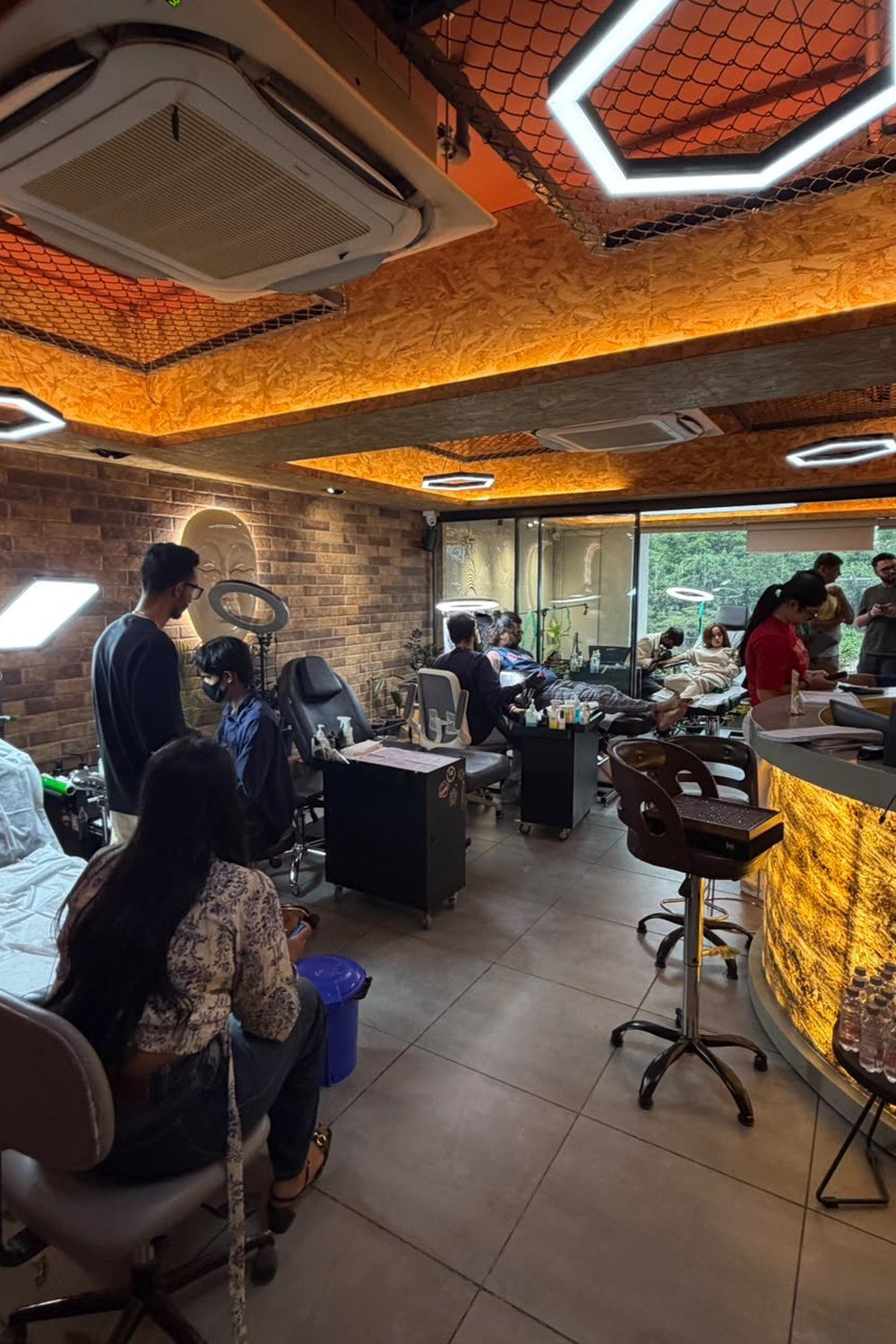
At Black Poison Tattoo Studio, every needle is single-use and opened from a sealed sterile pack in front of the client, reusable equipment is autoclave-sterilised, artists wear fresh medical-grade gloves, and the chair and station are disinfected between clients. At Black Poison Tattoo Academy, hygiene and safe studio practice is assessed before a certificate is issued.
A UK careers page lists hepatitis B vaccination as a requirement for UK tattooists. We found no equivalent Indian rule, but ask any school or studio about vaccination for its artists and trainees.
Is there a tattoo licence in India?
As far as we could verify, there is no law at national level written specifically for tattooing. This is what we read:
- Karnataka health officials, covered by MedBound Times, said there is currently no specific legislation in the country governing tattooing. The state is preparing guidelines and has asked the Centre for nationwide rules.
- A Deccan Chronicle report says that at present India has no law or licensing requirement specifically governing the tattoo industry, and describes street tattooing with no gloves and reused ink containers.
- An India-focused career guide says there is no single national law governing body art, that local rules such as municipal health trade licensing and Shops and Establishments registration vary by city and state, and that a course does not confer a government-recognised licence.
- A medical news summary reports a Delhi High Court petition asking for national tattoo safety standards and licensing of parlours.
What we could not verify: what Ahmedabad or Gujarat authorities require, whether Karnataka has issued its guidelines, and the date and outcome of the Delhi petition. Ask your local authority before opening a studio. This is not legal advice.
How do you choose a course?
Ask these before you pay anyone, and get answers in writing.
- Can I see the syllabus, month by month?
- How is hygiene taught, and how is it assessed?
- When do students first work on real skin, and who decides they are ready?
- Who teaches, and how long have they worked as tattoo artists?
- What does the fee cover, and what must I buy separately, such as machines?
- What exactly does the certificate say, and who issues it?
- How big are the batches, and how much individual feedback is there?
- In which language is the teaching done?
Red flags (our own judgement):
- Any promise of a job or an income.
- Claims of official recognition or international approval with no named body you can check.
- No written syllabus, or hygiene missing from it.
- Real skin from the first week.
- A certificate that is promised for payment alone, with no assessment.
- Pressure to pay today.
What does a good first year look like?
We do not give income figures. We found no reliable India-specific source we could verify, and a guess would be a promise we cannot keep. Treat any income promise made before you can tattoo with caution.
What we can describe is the learning order. Our Professional Tattoo Artist Course runs month by month like this:
- Drawing and Art Fundamentals
- Tattoo Design and Stencil Preparation
- Tattoo Machine and Safety Fundamentals
- Synthetic-Skin Practice
- Supervised Studio Practice
- Portfolio and Final Assessment
Whatever the route, a sensible first year is mostly drawing, hygiene and practice skin, then supervised work when a mentor confirms readiness, then a small portfolio. Expect it to be slow. We make no promise about when or whether a client base follows.
What mistakes do beginners make?
- Practising on themselves or friends before they can draw or handle a machine safely.
- Buying a machine first. Ask your trainer before you buy equipment.
- Learning hygiene only from videos, when not everything online is correct or safe.
- Believing a certificate is a licence. It is not.
- Believing guarantees of jobs, income or fast results.
- Tracing other artists’ tattoos to fill a portfolio. Studios want to see you can design.
What does Black Poison Tattoo Academy teach?
Black Poison Tattoo Academy, part of Black Poison Tattoo Studio in Ahmedabad, runs three programmes:
- Professional Tattoo Artist Course: for beginners, 4 to 6 months, 5 days a week. Studio-based theory, demonstrations and hands-on practice, with no previous tattooing experience required.
- Digital Tattoo Design and Consultation Course: 1 month, 5 days a week, for tattoo artists and designers.
- Tattoo Artist Upgrade Program: 8 weeks, 4 days a week, for artists who already have experience.
The Professional course is assessed on drawing, stencil work, machine handling, practical technique, hygiene and safe studio practice, client communication, and a final project and portfolio. Supervised work on real skin happens only when the mentor confirms readiness, after skill and hygiene checks. Stationery, practice materials and course notes are included. Machines and personal equipment are bought separately.
Minimum age is 18 and minimum education is 10th pass. Teaching is in English, Hindi and Gujarati, in small batches so every student gets individual attention, at the Academy in Bodakdev, Ahmedabad. Students from other cities and countries are welcome. After the required training and assessments, students receive a Certificate of Completion issued by Black Poison Tattoo Academy. It is the Academy’s own certificate, not a licence. Ask for fees on WhatsApp.
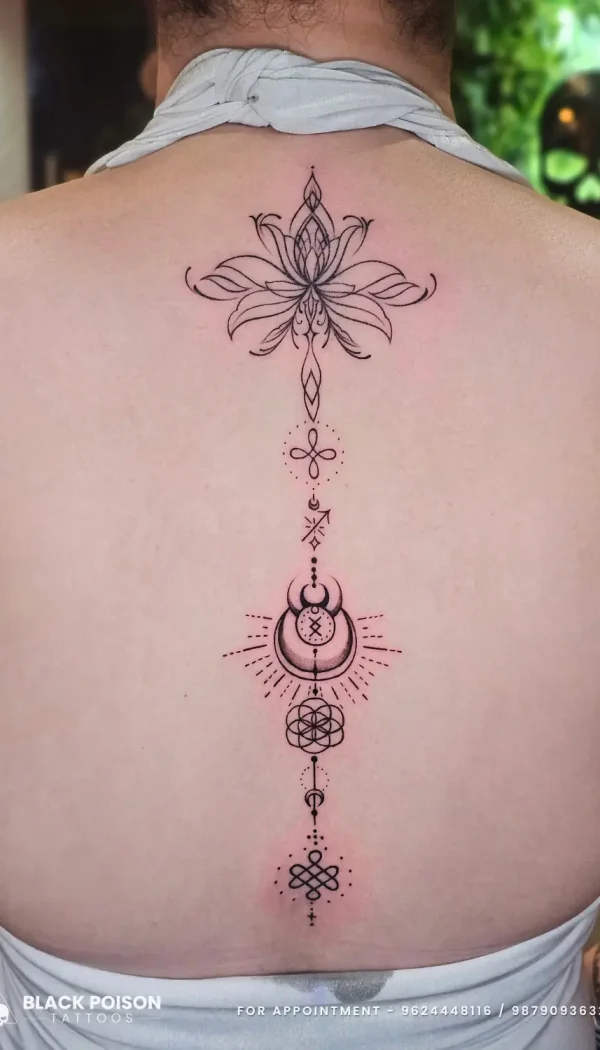
See the Professional Tattoo Artist Course in Ahmedabad or the Academy courses overview. The studio artists’ tattoo portfolio shows the standard of work you would be learning from.
Chat on WhatsApp about the Professional course. Fees are shared there.
Frequently asked questions
Do I need a degree to become a tattoo artist in India?
No formal degree is required to start. An India-focused career guide lists no formal entry requirements for artists and says that, with no licensing exam, your actual skill matters most. Schools set their own rules: at Black Poison Tattoo Academy the minimum is age 18 and 10th pass.
Do I need a licence to work as a tattoo artist in India?
We found no national law written specifically for tattooing, and no national tattoo artist licence. Local rules such as municipal health trade licensing are reported to vary by city and state. We could not verify what Gujarat or Ahmedabad require, so ask your local authority. A course certificate is not a government licence.
How long does it take to become a tattoo artist?
There is no official timeline. US sources describe apprenticeships of one to three years, or six months to four years. Our Professional Tattoo Artist Course for beginners is 4 to 6 months, and further practice is needed after it.
Do I need to draw well before I start?
Yes, drawing is the base of the craft. You do not need finished tattoo designs, but you should draw steady lines, shade evenly and design an original piece. Try the self-test above.
Is a tattoo course better than an apprenticeship?
Neither is better for everyone. An apprenticeship gives one-to-one learning inside a studio but can be long and depends on one mentor. A course gives a fixed syllabus and taught hygiene, but quality varies and a certificate is not a licence. We run a course, so weigh our view with that in mind.
Can I learn tattooing online or by myself?
Drawing and design theory can be learned online. Hygiene, machine handling and reading skin need in-person supervision, and a US training site warns that not all online information is correct or safe. We advise against tattooing yourself or friends.
Can tattooing spread infections?
Yes. Contaminated equipment or ink can spread bloodborne viruses such as hepatitis B, hepatitis C and HIV, as well as skin infections. Safe practice means single-use sterile needles, a sharps container, clean surfaces, gloves and no reuse of leftover ink. Ask any school how hygiene is taught and assessed.
Sources
- Public Health, York Region (Ontario, Canada): Tattooing and Micropigmentation fact sheet. https://www.york.ca/resource/tattooing
- MedBound Times: Karnataka Plans Regulations to Put Checks on Tattooing over Health Concerns; Writes to Centre. https://www.medboundtimes.com/amp/story/india/karnataka-tattooing-regulations-health-risks
- Deccan Chronicle: Hyderabad street tattoos thrive amid health risks. https://www.deccanchronicle.com/amp/southern-states/telangana/hyderabad-street-tattoos-thrive-amid-health-risks-1883723
- CareerPlanB: Tattoo artist course in India. https://www.careerplanb.co/tattoo-artist-course-india/
- Omnicuris: Delhi HC PIL Seeks Mandatory Tattoo Regulation in India. https://www.omnicuris.com/medshots/daily_updates/tattoo-safety-standards-delhi-hc-pil
- Tommy’s Supplies: How to Become a Tattoo Artist, The Apprenticeship Path Explained. https://www.tommyssupplies.com/blogs/news/how-to-become-a-tattoo-artist-the-apprenticeship-path-explained
- Tattooing 101: How to become a tattoo artist (guide). https://tattooing101.com/learn/category/guides/become-a-tattoo-artist/
- National Careers Service (UK): Tattooist and body piercer. https://nationalcareers.service.gov.uk/job-profiles/tattooist-and-body-piercer
Some of these are news summaries or commercial sites, and several describe US or UK practice, not India. We used them only for the narrow points listed above. The Academy and studio facts are our own.
Last reviewed: at publication. We update this page as rules change.