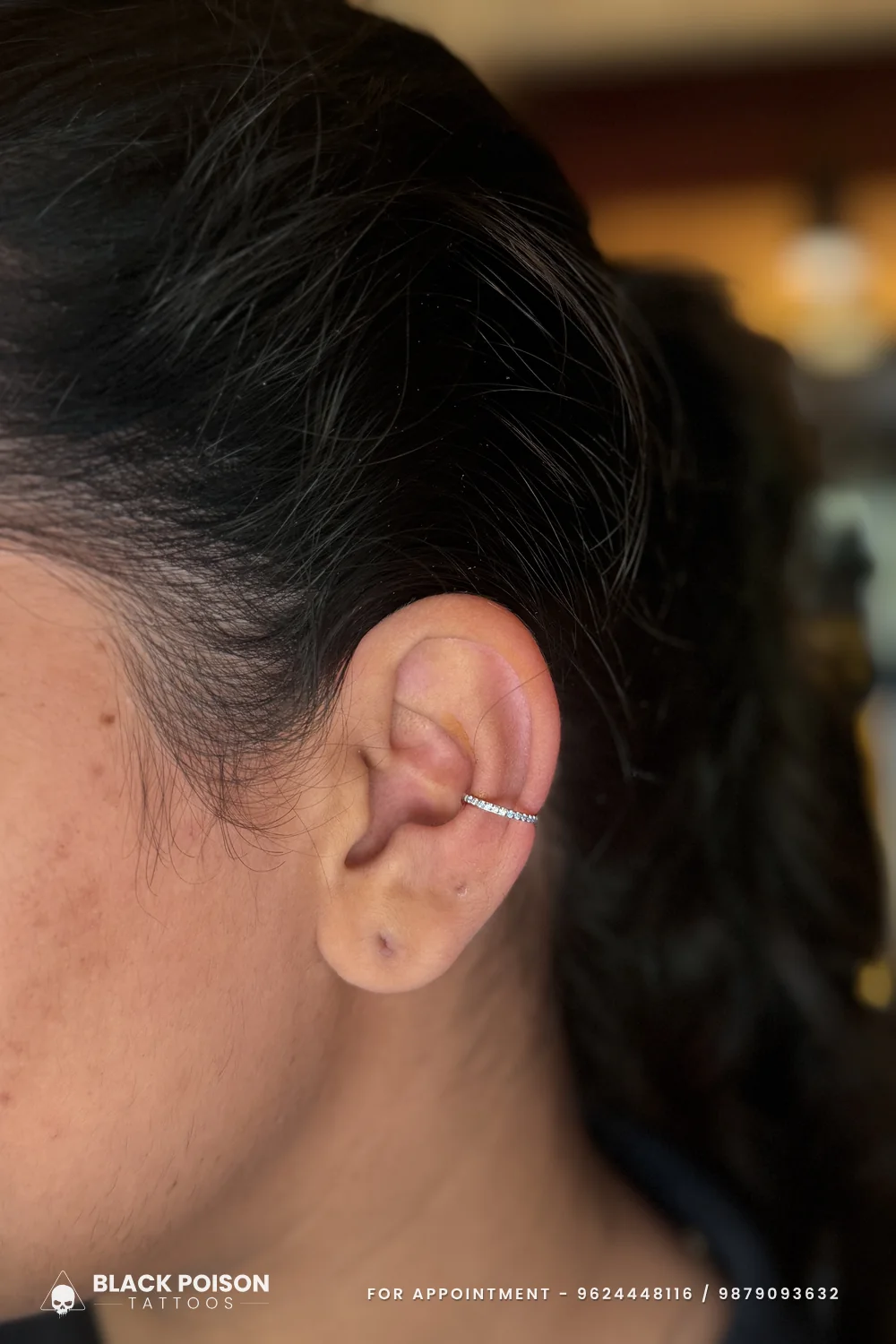
This is a conch piercing wearing a slim crystal-set ring. The conch is the central bowl of the ear, the thick cartilage plate between the ear canal and the outer rim, and a ring placed here wraps around the edge of that bowl so the jewellery hugs the ear rather than hanging from it. The ring is fine, with a line of tiny stones along its outer face. It was pierced with a single-use sterile needle at Black Poison Tattoo Studio in Ahmedabad.
Where the conch sits and why a ring works
The conch is pierced through the flat plate of cartilage in the middle of the ear, roughly level with the ear canal. It is one of the most visible cartilage placements because the jewellery sits in the open bowl rather than along the rim, and it looks good on its own without a stack of other piercings around it. In this photo the ring is a slim hoop set with small crystals, sized so it curves neatly around the outer edge of the conch and rests against the skin. A conch can also be worn with a flat-back stud, which is what we usually fit first, and swapped for a ring once it has healed.
How we pierce the conch at the studio
Conch cartilage is thick, so it is always pierced with a single-use sterile hollow needle, never a gun, and the angle is marked first so the jewellery sits straight and flat against the ear. We check the shape of your ear before marking because the bowl varies from person to person and the placement has to allow room for a ring later. The setup is fully sterilised, gloves and needles are opened in front of you, and the initial jewellery is implant-grade titanium or surgical steel, both hypoallergenic. Our piercers at Black Poison Tattoo Studio in Ahmedabad will talk you through the whole process before starting.
Healing a conch and looking after it
Cartilage heals slowly. A conch typically takes six to twelve months to heal fully, and it is not unusual for it to take longer. Clean it twice a day with sterile saline, do not twist or turn the jewellery, and try not to sleep on that side, because pressure is the most common cause of irritation bumps. Keep hair products, phones and headphones off it as much as possible. A ring should only go in once the piercing is fully settled; a stud is more stable while healing because it does not move. If you already wear a ring, as in this photo, it means the piercing has passed that stage.
Want a similar piercing? Read about every placement in our types of piercings guide, see the full piercing service page, or book your appointment online at Black Poison Tattoo Studio, Bodakdev, Ahmedabad. Walk-ins are welcome for lobe piercings.
Frequently Asked Questions
How much does a conch piercing hurt?
The conch is thicker cartilage than the helix, so most people feel a firm pressure and a sharp pinch that lasts a second or two, followed by a warm throbbing for the rest of the day. It is done in one quick motion with a needle. Most clients rate it a little higher than a lobe but very manageable.
How long does a conch piercing take to heal?
Plan for six to twelve months, sometimes longer. The outside may look calm within a few weeks, but the cartilage inside heals much more slowly. Keep up saline cleaning, avoid sleeping on it and leave the jewellery alone during that time. Change to a ring only once it has been settled for several months with no soreness or bumps.
Can I get a ring in my conch straight away?
We recommend starting with a flat-back stud. A ring moves as you sleep, wear headphones or brush hair, and that movement irritates fresh cartilage and slows healing. Once the piercing has fully healed, we can fit a slim ring like the one shown here and size it so it hugs the conch properly.
How much does a conch piercing cost?
Pricing depends on the jewellery you choose and whether you are having one piercing or several in the same visit. Implant-grade studs and crystal-set rings are priced differently. Send us a message with what you have in mind and we will give you a clear quote before you come in, with no obligation.